On Call Garage Doors covers Havelock daily. Springs, openers, cables and off-track doors, same day where we can. Free visit and free written estimate.
When a broken torsion spring happens in Lincoln it happens without warning. The parts that fail are the ones under constant load, and they give out on an ordinary morning rather than during a storm. Across Lancaster County the pattern is consistent: deep cold snaps springs and ice bonds the bottom seal to the slab, and pre-war near-south homes with detached garages and newer south builds take the worst of it.
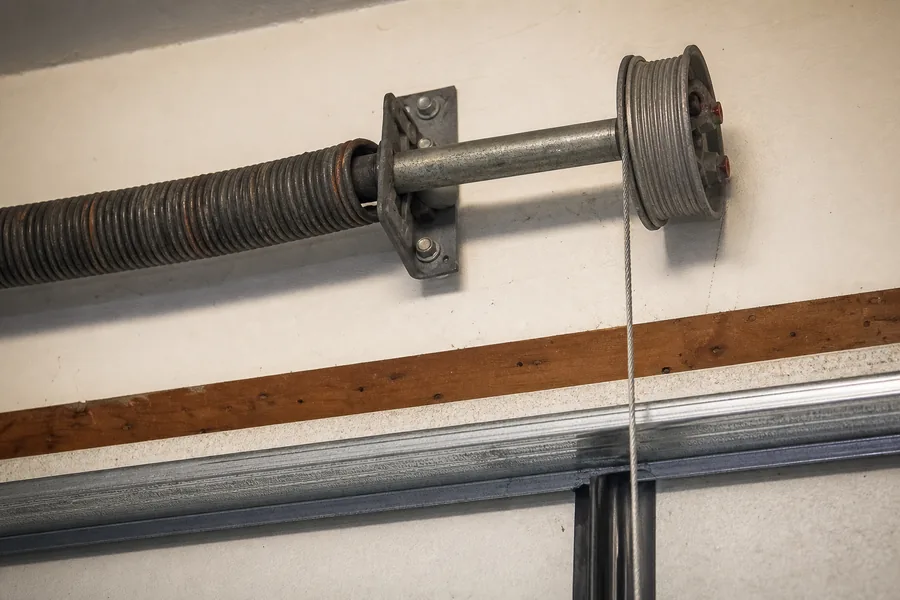
The spring is not what lifts the door - it is what cancels the door's weight. A double steel door weighs between 130 and 190 pounds, and an insulated one more. Wound tight, the spring stores almost exactly that much energy, so the door behaves as though it weighs nothing and a half-horsepower motor can move it. When the spring breaks, that cancellation disappears at once and the full weight lands on the opener, which is not built to lift it.
Anywhere in Lincoln or Waverly, Hickman, Malcolm the visit and the written estimate cost nothing. If you decide not to go ahead after seeing the estimate, you owe nothing.
The sound is unmistakable if you were home for it - a single flat bang, like a heavy book dropped on a concrete floor. Most people are asleep when it happens, because the metal contracts as the garage cools overnight and that is when a spring at the end of its life gives up.
If any of that matches, a technician can diagnose it on site in about ten minutes. We do not guess at it down the phone, and we do not charge to look.
Count the trips rather than the years and the failure stops looking random. One cycle is up and down once; the spring most builders fit is good for ten thousand of them. Two cars leaving and returning on a weekday is four cycles, plus the school run, plus the trash cans - call it six. Six a day is 2,190 a year, which spends a ten-thousand-cycle spring in under five. Nothing has gone wrong when it breaks. It has simply been used up.
Springs come in a specific wire gauge, inside diameter and length, and the three together have to match the door's weight. A spring that is close but not right will lift the door and then fail early, which is why we measure the old spring and weigh the door rather than fitting whatever is on the van.
Springs on a two-spring door are wound the same number of cycles and age together. If one has gone, the other is at the same point in its life and is usually weeks behind. Replacing one and leaving the other means paying the labor twice, which is why we quote both and let you decide with the numbers in front of you.
People put this off, and it is worth being straight about where that goes. None of the following is unusual - it is the ordinary sequence, and we see it in Lincoln every week.
The visit and the written estimate are free, so finding out where you stand costs you nothing at all. That is the whole reason to call early rather than late.
The question behind 'do you work on my brand' is really 'will you have the part'. For everything below the answer in Lancaster County is yes, either on the van or within a day.
| Brand | Notes |
|---|---|
| Sommer / Marantec | Less common here, direct-drive heads, and the parts have to be ordered - so we confirm the model before the van is loaded. |
| Amarr | Sections and hardware are widely available and the tracking is standard, which keeps repair costs sensible. |
| Genie | Screw-drive and belt-drive heads. Intellicode remotes and carriage assemblies are the usual failure points, and both are parts rather than a reason to change the opener. |
| Chamberlain myQ | Wi-Fi hubs and the app side fail more often than the mechanics do. Usually a re-pair rather than a replacement. |
| Overhead Door / Raynor | Standard torsion hardware on the residential lines - nothing unusual to source. |
| Craftsman | Built on Chamberlain internals for most of their production run, so the gear kits and boards are shared and readily available. |
Not listed is not a problem. Residential doors are overwhelmingly standard hardware, and the handful that are not are identified from the model number in about ten seconds on the phone.
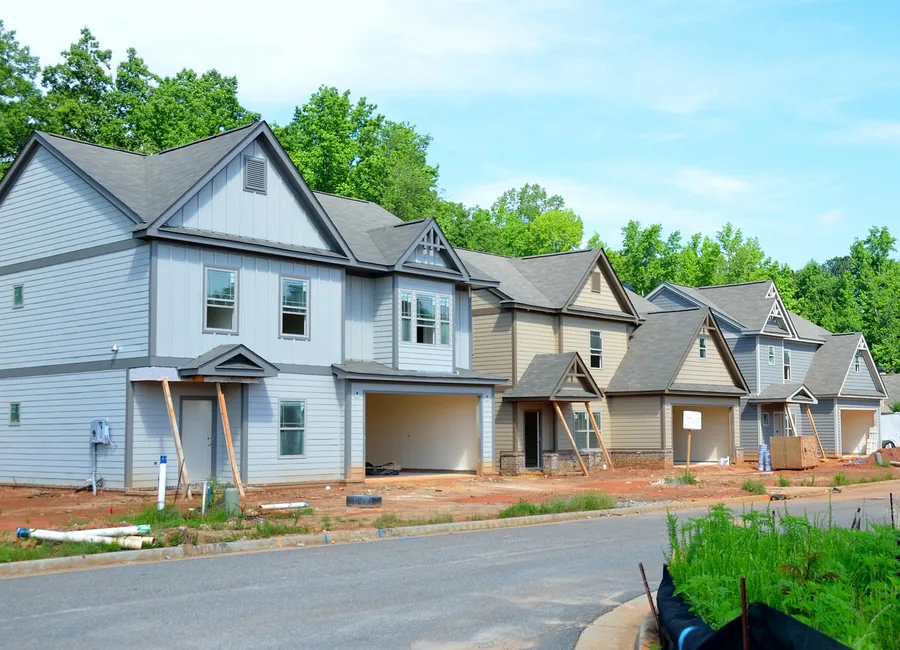
Lincoln is the base and the surrounding towns are within the normal working radius. These are the areas the van is in most days:
Emergency and after-hours calls run to the same map. A door standing open overnight anywhere on that list gets somebody out.
There is one job on a residential garage door that sends people to hospital, and this is it. The energy in a wound spring does not dissipate because the spring has broken - the remaining half is still loaded, and the set screws holding it are the only thing in the way. Undone without winding bars properly seated, that load leaves in a fraction of a second and takes fingers with it. Adjustable wrenches and screwdrivers are not winding bars.
Leave it where it is and unplug the opener if the temptation is strong. Almost every large garage door repair we quote started as a small one that somebody kept operating for another two days.
Need the car? Pull the red cord with the door all the way down, never partway, and lift steadily. If it will not move easily with two hands, it is not going to, and forcing it is how people are injured.
The difference between a job finished today and a job finished on Thursday is almost always whether the right part was on the van when it arrived. So the van is loaded for what Lincoln actually breaks rather than for a national average.
Springs in the common sizes, lift cables, drums, rollers, hinges, brackets, opener gear kits, remotes, safety sensors and weather seal all travel with the technician. Panels and complete doors are ordered, and we tell you that at the estimate rather than on the day.
It is also why the description you give on the phone matters. Tell us what the door is doing, what it sounds like, whether it is a single or a double and roughly how old it is, and the van leaves already carrying the answer.
Most garages in Lincoln are pre-war near-south homes with detached garages and newer south builds. That single fact drives more of what goes wrong than the weather does, because it sets the door's weight, and the door's weight sets everything else - spring size, cable gauge, how hard the opener works.
A double door in Lincoln runs 130 to 190 pounds, more if it is insulated. That weight is cancelled by the spring, carried by two cables, and steered by rollers in a steel channel. Take any one of those three out and the other two fail within days.
Around Havelock and Williamsburg we see the consequences of that chain often enough to recognize them on the phone. A description of the noise usually tells us which of the three went first, and what else it has already damaged.
Which is the practical reason to call somebody who works this area rather than a dispatch number: the diagnosis starts before the van leaves.
Deep cold snaps springs and ice bonds the bottom seal to the slab. Split by component, the effect is not evenly distributed:
| Part | What the local climate does to it |
|---|---|
| Torsion spring | Surface corrosion removes section, stress concentrates there, and the spring fails short of its cycle rating. |
| Lift cables | Rust starts at the bottom bracket end, closest to the floor, and works up the lay of the wire. |
| Rollers | Grit and moisture together destroy unsealed bearings; sealed nylon rollers are largely immune. |
| Bottom seal | Hardens, cracks, and stops sealing - after which the weather is inside the garage rather than outside it. |
| Opener | Suffers indirectly. Every one of the above makes the door heavier to move, and the nylon drive gear is what pays for it. |
None of it is exotic and none of it needs a special product. It needs looking at twice a year, which is the part most people in Lincoln skip.

One technician, one van, one job at a time, and the same process whether it is two in the afternoon or two in the morning.
The fault is confirmed on the door rather than guessed at down a phone line. The work is written down before anything is touched. Nothing is added afterwards - if something else is found once the door is apart, it is shown to you and agreed separately.
The door is cycled, balanced and its safety reversal tested before we leave, and the work is warranted in writing. That is the whole of it, across Lancaster County.
The call itself takes about three minutes. We ask what the door is doing, what it sounds like, whether anything is visibly out of place, and roughly how old it is. That is usually enough to know which parts the van needs.
Loading the van from that description is the part that decides whether your broken garage door spring repair is a one-visit job or a two-visit job. It is also the part a national dispatch number cannot do, because it does not know who is coming.
On site the technician confirms the diagnosis on the door. Sometimes the phone description was wrong - a 'broken opener' is quite often a broken spring - and it is better to find that out with the parts already in the van.
The estimate is written before work starts. The repair itself is usually under two hours, and the door is tested and balanced before anyone leaves.
Yes - LiftMaster, Chamberlain, Genie, Craftsman, Clopay, Amarr, Wayne Dalton and the rest. The mechanisms are common across brands and we carry parts for all of them.
Most broken garage door spring repair jobs are finished within the same visit, typically under two hours.
Usually, yes. We hold same-day slots for Lincoln and the surrounding towns, and a door stuck open or a car shut in goes to the front of the list.
A residential torsion spring is rated in cycles, not years. The standard spring supplied with most doors is a 10,000-cycle spring, and one cycle is one trip up and one trip down. A household that opens the door four times a day uses about 1,460 cycles a year, so the arithmetic gives seven years. A household with two working adults and a teenager can double that rate and see the spring go in three.
No. The visit and the written estimate are free anywhere in Lancaster County. You pay only if you agree the price and we do the work.
Springs on a two-spring door are wound the same number of cycles and age together. If one has gone, the other is at the same point in its life and is usually weeks behind. Replacing one and leaving the other means paying the labor twice, which is why we quote both and let you decide with the numbers in front of you.
One call gets you a two-hour arrival window rather than a day, and a technician who rings before setting off. No lead auction, no bidding, no stranger quoting your door by phone.
Free visit, free written estimate, fixed price agreed before anything is touched. Throughout Lincoln and Waverly, Hickman, Malcolm.
Rated in cycles, not years, and it uses them faster than anyone expects. When it breaks the full weight of the door lands on a motor built to position it, not lift it.
What this costs and how fast →Before you buy a new one: an opener that strains is usually reporting a spring problem, not an opener problem. Replacing the head will not fix that.
What this costs and how fast →A door that comes off once comes off again unless the cause is found. Usually a seized roller, a slipped drum or a loose bracket.
What this costs and how fast →One cable slack, one taut, and the door sitting crooked. Cables carry the door's whole weight to the spring, so this one does not wait.
What this costs and how fast →Door stuck open overnight, or the car shut in. Same-day and after-hours, with the common parts already on the van.
What this costs and how fast →Insulation is the specification you notice daily: R-0 to R-2 bare, R-6 to R-9 polystyrene, R-12 to R-18 polyurethane. Stiffer and much quieter.
What this costs and how fast →