Lincoln, NE
Off-Track Garage Door Repair in Lincoln
One corner dropped and the panel is out of the channel. Stop running the opener - each attempt drags more hinges and track out of line.
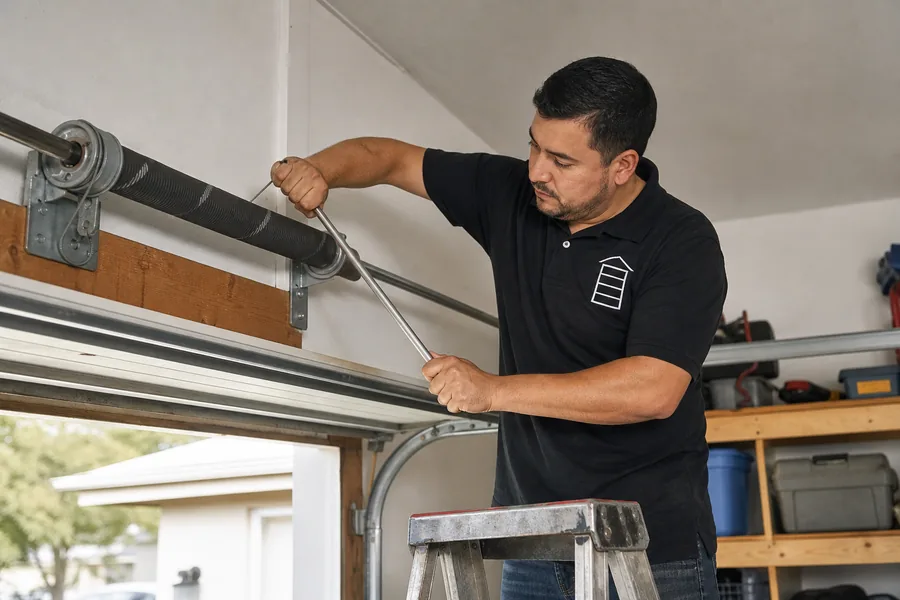
One corner dropped and the panel is out of the channel. Stop running the opener - each attempt drags more hinges and track out of line.
A door off its track is the fault we are called out for most often in Lincoln, and it is the one homeowners least expect. Nothing wears visibly, nothing sounds wrong, and then one morning the door will not lift and the car is shut in. Around Near South and Havelock we see it concentrated in pre-war near-south homes with detached garages and newer south builds, where deep cold snaps springs and ice bonds the bottom seal to the slab.
Ten or twelve rollers carry the door inside a steel channel, and the channel is what keeps the door flat in the opening. Lose one roller out of the channel and that corner drops. The panel it belongs to twists, which levers the rollers above and below it out as well, and the failure runs up the door faster than you can get to the button.
Anywhere in Lincoln or Waverly, Hickman, Malcolm, there is no trip fee and no diagnostic fee. If you decide not to go ahead after seeing the estimate, you owe nothing.
This is the fault you can diagnose from the driveway. The two sides of the door are at different heights. There is daylight along one edge that was not there before. The door moves partway and then binds, or grinds instead of rolling, and you can usually see the roller sitting proud of its channel.
If any of that matches, a technician can diagnose it on site in about ten minutes. We do not guess at it down the phone, and we do not charge to look.
It can be made to look straight. It will not run true, and the rollers will keep leaving it. A vertical track section is an inexpensive part and it gets replaced.
Track does not fail with age. Something caused it - a seized roller, a slipped cable drum, a loose bracket, or an impact. If the cause is not found the door comes off again within weeks, which is why we look for it rather than just reseating the rollers.
The door is still connected to a loaded counterbalance while it is off the track. Levering a panel back into the channel with the spring still wound is how people get hurt, and how a realignment turns into a panel replacement.
None of that is unique to Lincoln. It is simply what happens when a door is quoted over the phone by somebody who has not seen it, and it is the reason we do not give prices before a technician has stood in front of the door.
None of this involves touching anything under tension, and all of it makes the phone call shorter and the estimate more accurate. Two minutes in the garage with the door down is enough.
Whatever you find, do not try to correct it. The value is in the description you give us, not in the repair - a technician arriving in Lincoln who already knows what failed arrives with the right part on the van.
A quote is only comparable if you know what is in it. This is what a off-track garage door repair in Lincoln covers, every time, whether the invoice is large or small.
None of that is optional or extra. It is what the job is, and it is why we would rather quote in writing on site than call out a number over the phone.
Most garages in Lincoln are pre-war near-south homes with detached garages and newer south builds. That single fact drives more of what goes wrong than the weather does, because it sets the door's weight, and the door's weight sets everything else - spring size, cable gauge, how hard the opener works.
A double door in Lincoln runs 130 to 190 pounds, more if it is insulated. That weight is cancelled by the spring, carried by two cables, and steered by rollers in a steel channel. Take any one of those three out and the other two fail within days.
Around Near South and Williamsburg we see the consequences of that chain often enough to recognize them on the phone. A description of the noise usually tells us which of the three went first, and what else it has already damaged.
Which is the practical reason to call somebody who works this area rather than a dispatch number: the diagnosis starts before the van leaves.
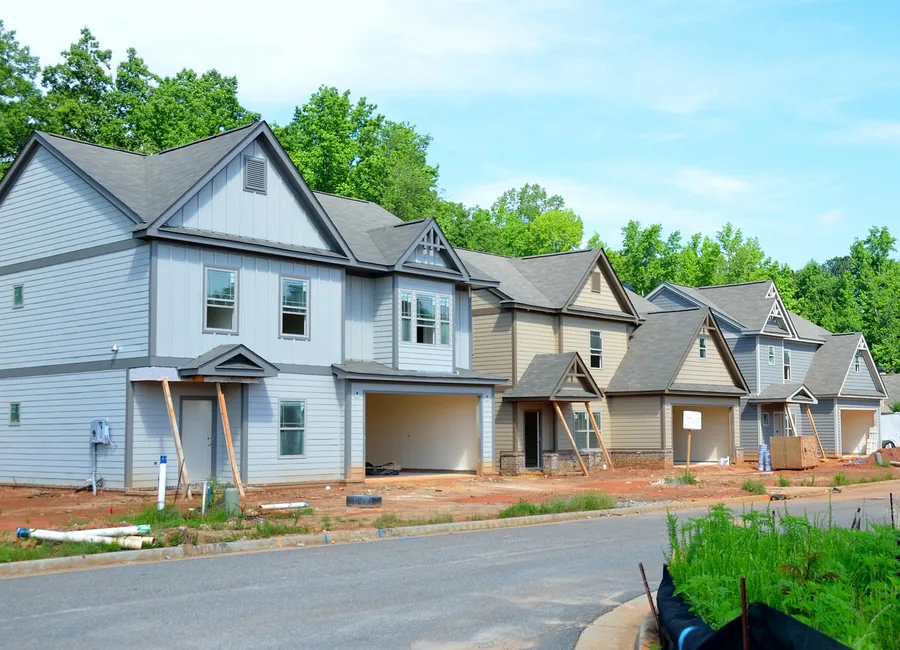
Deep cold snaps springs and ice bonds the bottom seal to the slab. Split by component, the effect is not evenly distributed:
| Part | What the local climate does to it |
|---|---|
| Torsion spring | Surface corrosion removes section, stress concentrates there, and the spring fails short of its cycle rating. |
| Lift cables | Rust starts at the bottom bracket end, closest to the floor, and works up the lay of the wire. |
| Rollers | Grit and moisture together destroy unsealed bearings; sealed nylon rollers are largely immune. |
| Bottom seal | Hardens, cracks, and stops sealing - after which the weather is inside the garage rather than outside it. |
| Opener | Suffers indirectly. Every one of the above makes the door heavier to move, and the nylon drive gear is what pays for it. |
None of it is exotic and none of it needs a special product. It needs looking at twice a year, which is the part most people in Lincoln skip.
Tracks do not wear out on their own. They come out of alignment because something happened - a car touched the door, a cable let go on one side, a roller seized and dragged, or the brackets loosened over years of vibration until the track drifted.
Done properly, the door's weight comes off the track first with proper support. Then the rollers are seated section by section from the bottom, every hinge is checked for the elongated holes that a derailment leaves behind, and the vertical track is trued against a level rather than by eye. Bent sections are replaced; a track that has been hammered back into shape will let the door off again.
Nine times out of ten there is a root cause behind the derailment, and if it is not found the door comes off again. A seized roller, a loose bracket or a cable drum that has slipped are the usual three, and the visit is not finished until we have identified which one it was.
These are the variables. They are the reason a number given down the phone by somebody who has not seen your door is a guess, and the reason the visit is free.
| Factor | Why it matters |
|---|---|
| How far it went | One roller out of the channel is a realignment. A door hanging at an angle with three panels twisted is a different job. |
| Whether the opener was run afterwards | Doors that were forced after coming off carry damage that doors left alone do not. |
| Hinge condition | Elongated hinge holes are the hidden damage in a derailment and the reason a 'fixed' door still runs badly. |
| Jamb condition | Track is only as straight as what it is bolted to. Rotten jambs get dealt with before the track goes back on. |
| Rear hanger condition | Horizontal track hung from loosened rear brackets will drop the door again a month later. |
The technician goes through whichever of those apply to your door before writing the estimate, so the number you are given is the number on the invoice.
Every job runs the same way, and it is worth knowing what that is before you pick up the phone.
You will get a real arrival window rather than a day, and a call before the technician sets off. If we are going to be late you hear it from us first.
Nothing is charged for the visit or for the estimate. The technician looks at the door, tells you what has failed and why, and writes the price down. If you decide against it at that point you owe nothing and there is no pressure applied.
If you go ahead, the price on the paper is the price on the invoice. The only way that changes is if something else is found once the door is apart, and then it is quoted separately and agreed before it is done - not added on at the end.
Before we leave, the door is cycled several times, balanced by hand, and the opener's safety reversal is tested with an obstruction. The work is warranted in writing on parts and labor.
A quote well below everybody else is almost always one of three things, and it is worth knowing which before you take it.
It is a builder-grade part where a better one costs a little more - the classic being a 10,000-cycle spring on a door that is opened six times a day, which puts you back where you started in about four years.
It is one side of a two-side job, leaving the second spring or the second cable to fail a few weeks later and the labor to be paid twice.
Or it is a phone number rather than a price, with the real figure arriving once the technician is in your garage and your car is behind a door that will not move.
None of that means the lowest quote is wrong. It means the three questions worth asking are: what is the part, is it both sides, and is this price fixed.
The honest answer changes with the door, so this is the test we actually apply in Lincoln rather than a rule of thumb.
| Situation | What we recommend |
|---|---|
| Door works but is deafening | Repair. Nylon rollers, new hinges and a proper service usually solve it. |
| Door is off its track after an impact | Repair first. Realign, find the cause, and only then judge whether panels are sound. |
| Repairs arriving more than once a year | Replace. You are paying for a new door in installments and not getting one. |
| One dented or cracked panel | Repair. Individual sections are orderable for every mainstream brand. |
| Opener over fifteen years old, board failed | Replace the opener only. A modern head is quieter and carries its own warranty. |
| Wooden door that has begun to swell and bind | Depends entirely on the frame. Worth a look before you commit to either. |
We will say when a repair is the better money even though the replacement is the bigger invoice. A door fixed properly that lasts another decade is worth more than one sale, because Lincoln is not a big enough place to work any other way.
Track does not wear out; it gets moved. Something puts it there - a bumper, a cable letting go on one side, a roller that seized and dragged, or years of vibration working the lag bolts loose until the vertical section is no longer vertical. Which of those it was decides whether the repair holds.
Yes, in writing, on parts and labor. If the same fault returns inside the warranty period we come back and put it right at no charge.
Yes - LiftMaster, Chamberlain, Genie, Craftsman, Clopay, Amarr, Wayne Dalton and the rest. The mechanisms are common across brands and we carry parts for all of them.
If a spring or cable has failed, no. Leave it down and do not force it. The counterbalance holds a great deal of stored energy and it can let go without warning.
Usually, yes. We hold same-day slots for Lincoln and the surrounding towns, and a door stuck open or a car shut in goes to the front of the list.
Yes - Waverly, Hickman, Malcolm and the wider Lancaster County area are all inside our normal service radius.
Tell us what the door is doing, what it sounds like and roughly how old it is. That is normally enough to know what has failed and what the van needs to bring.
The visit is free, the written estimate is free, and there is nothing to pay if you decide against it. Lincoln, Waverly, Hickman, Malcolm and the rest of Lancaster County.
Tell us what the door is doing and we will give you a real arrival window. The visit and the written estimate cost nothing, anywhere in Lancaster County.
Prefer to talk it through? Call (402) 897-1796.
One flat bang overnight and the door will not lift. The spring is what cancels the door's weight, and when it goes the opener cannot take over.
What this costs and how fast →Before you buy a new one: an opener that strains is usually reporting a spring problem, not an opener problem. Replacing the head will not fix that.
What this costs and how fast →One cable slack, one taut, and the door sitting crooked. Cables carry the door's whole weight to the spring, so this one does not wait.
What this costs and how fast →The fault is ordinary - a spring, a cable, a derailed door. What makes it urgent is what it has trapped. Secured first, repaired second.
What this costs and how fast →Insulation is the specification you notice daily: R-0 to R-2 bare, R-6 to R-9 polystyrene, R-12 to R-18 polyurethane. Stiffer and much quieter.
What this costs and how fast →